
Treatment
Diabetes Feet
Why Diabetic Foot Care Matters
When you have diabetes, two common complications can affect your feet:
- Peripheral Neuropathy — a loss of sensation in your feet (often starting at the toes), caused by nerve damage.
- Peripheral Arterial Disease (PAD) — poor circulation resulting from blood vessel damage, which can greatly reduce blood supply to your feet.
Because of these issues, even a small cut, corn or hard skin can lead to serious complications — slow‑healing wounds, infections, ulcers, or even risk of amputation.
That’s why regular professional foot care is essential for people with diabetes.
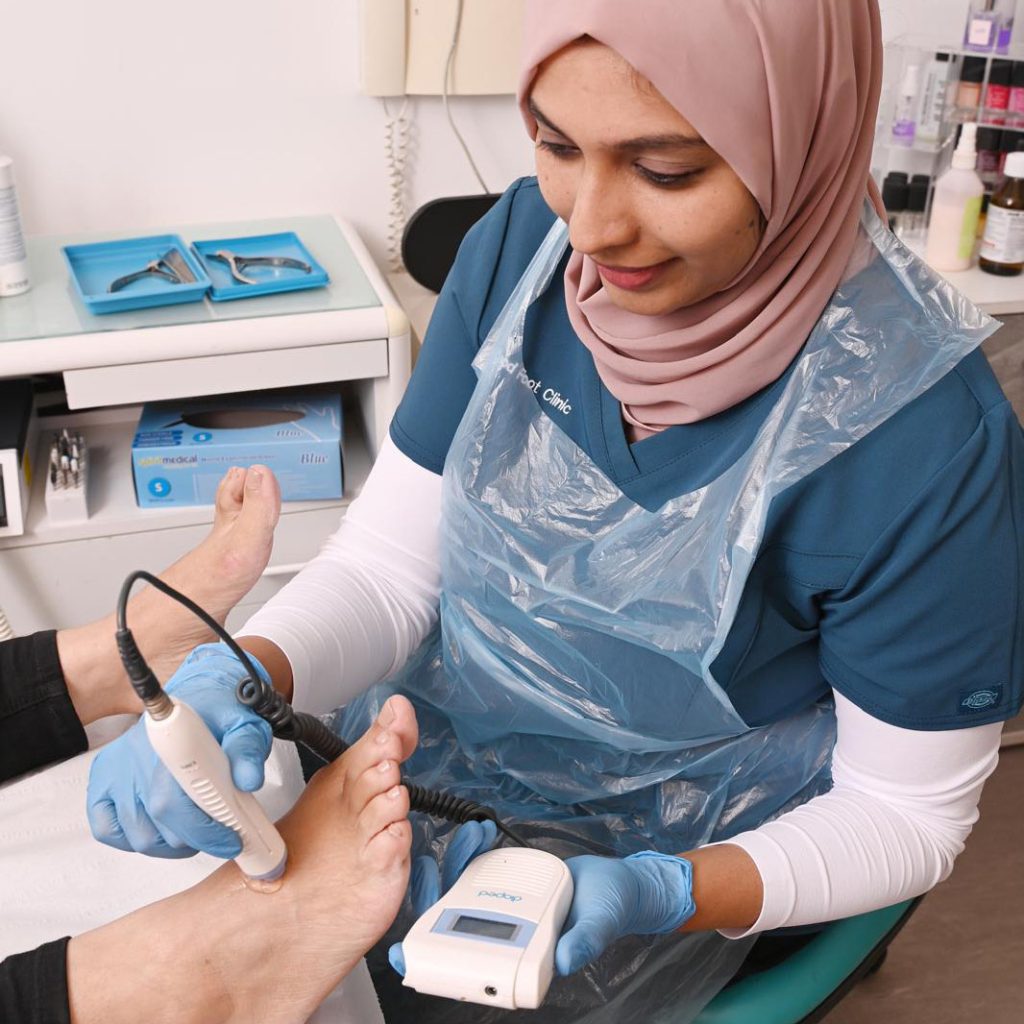
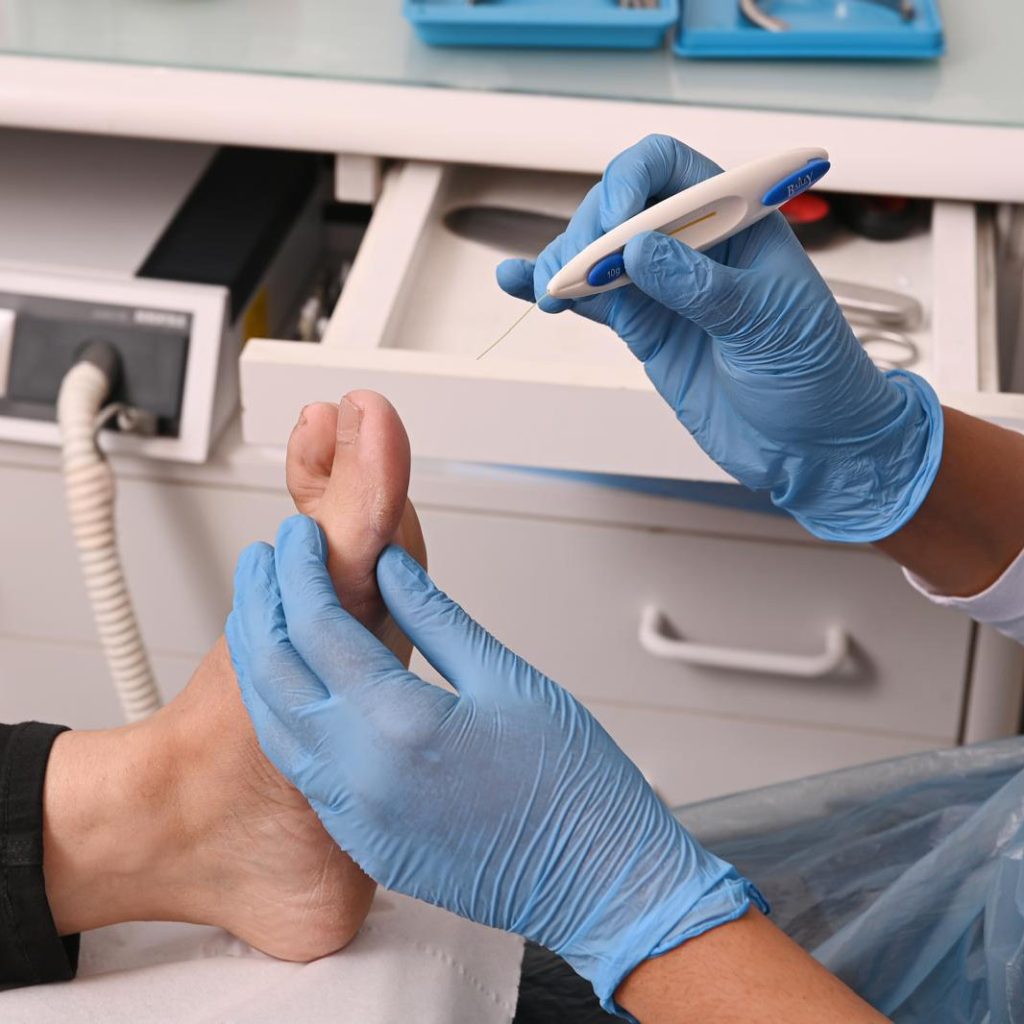
What We Offer at Longwood Foot Clinic
- Includes a full vascular check with a hand‑held Doppler ultrasound to assess blood flow, helping ensure good circulation to your feet.
- We examine skin condition — checking for dryness, cracks, fungal infections, calluses, corns or other skin/nail issues.
- We test nerve sensation using the 10gram monofilament testing to detect early signs of neuropathy — vital in diabetic foot care.
- We check foot structure and deformities, and assess footwear and lifestyle factors to support optimum foot health.
Individual Risk Assessment & Reporting
- After the assessment, we evaluate whether your feet fall into a low, medium, or high risk category for diabetic foot complications.
- If we identify concerns (e.g. reduced circulation, neuropathy, skin breakdown risk), we flag them and produce a detailed report.
- We supply a written or electronic copy of the assessment and report — ideal for sharing with your GP or diabetes‑care nurse for coordinated care.
Recommended Foot Care Routine for Diabetic Patients
- Regular appointments (typically every 6–8 weeks) for toenail trimming, removal of hard skin or corns, and thorough inspection — helping prevent pressure points, skin breakdown, or ulcer development.
- All treatments are carried out using sterile, autoclaved instruments, to minimise infection risk — especially important for diabetic patients with reduced circulation or sensation.
- Advice and guidance on footwear, skin care, and self‑care between visits. Prompt attention to any changes (cuts, blisters, redness, swelling) — don’t wait for your next routine visit.
Why Sterile Instruments Matter
People with diabetes are at higher risk of foot‑related infections and poor wound healing due to nerve damage and reduced circulation.
At Longwood Foot Clinic, we sterilise our instruments using an autoclave (steam under high pressure). This ensures that bacteria, viruses, fungi and spores are destroyed before use, protecting you from infections that could lead to serious complications.
Why Choose Longwood Foot Clinic for Diabetic Foot Care
- Specialist diabetic foot assessments: We follow evidence‑based guidelines to screen for neuropathy, circulation problems, skin changes, nail issues and more — essential to prevent ulceration, infection, or worse.
- Routine care to maintain foot health: Regular check‑ups every 6–8 weeks (or more frequently if needed) help catch issues early — and ongoing maintenance (nail trimming, hard skin & corn removal) reduces the risk of complications like ulcers or amputation.
- Strict sterilisation and hygiene standards: We use autoclave‑sterilised instruments (steam under pressure) — the recognized gold standard — ensuring that all procedures (especially for diabetics) are done in a clean, safe, clinically regulated environment.
- Personalised & safe care for higher‑risk feet: For patients with reduced sensation, poor circulation, or previous foot issues, we provide tailored care — from regular monitoring to proactive management — to prevent problems before they escalate.
- Empowering you with clear information and ongoing support: Following your diabetic foot assessment, a written foot health report can be provided upon request. This can be shared with your GP or diabetes nurse, helping both you and your healthcare team monitor and manage your foot health over time.